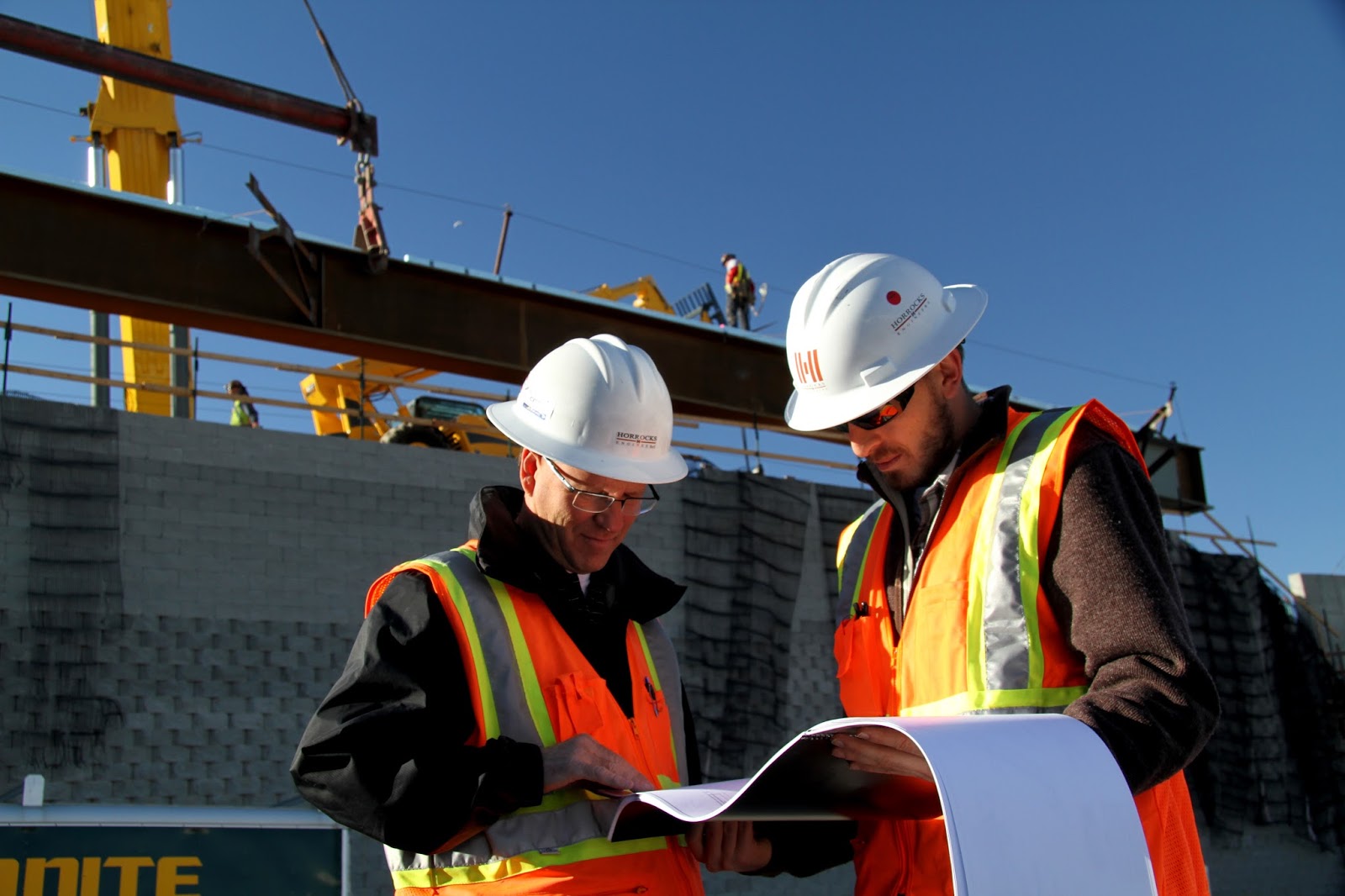
The Quantity Surveyor Course in Rawalpindi is designed for students, beginners, civil engineering learners, and construction professionals who want to develop practical skills in construction measurement and costing. The course introduces learners to important Quantity Surveying tasks such as quantity takeoff, measurement, estimation, rate analysis, BOQ preparation, material calculations, and basic project costing. Students learn how construction quantities are measured from drawings and how this information is organized for project planning.
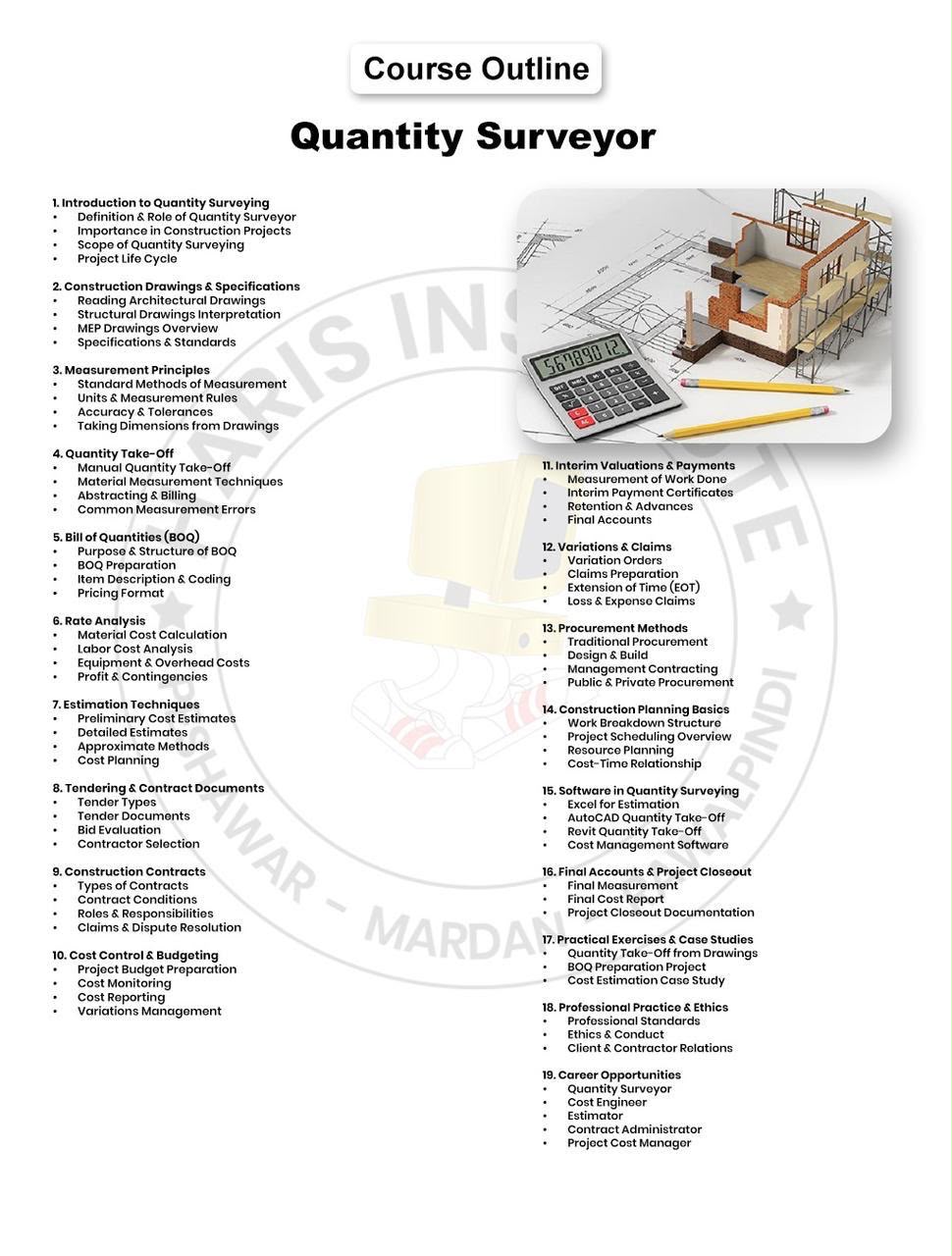
The course also focuses on practical understanding of building drawings, specifications, construction materials, Excel, and estimating techniques used in construction projects. Through simple examples and exercises, learners can improve their ability to prepare measurements, calculate quantities, and organize cost information. This training can provide a useful foundation for those looking to develop careers in quantity surveying, estimation, construction, and site-related work.
Quantity Surveyor Course FAQs
- What is a Quantity Surveyor Course?
It is a course that teaches construction measurement, quantity calculation, estimation, costing, and BOQ preparation. - Who can join a Quantity Surveyor Course in Rawalpindi?
Students, beginners, civil engineering learners, draftsmen, and construction professionals can join. - Is this course suitable for beginners?
Yes, the course can start with basic concepts and gradually move toward practical work. - What does a Quantity Surveyor do?
A Quantity Surveyor measures construction work, prepares quantities, assists with costing, and manages project cost information. - What is quantity takeoff?
Quantity takeoff is the process of calculating the amount of construction work and materials from drawings and specifications. - What is BOQ?
BOQ stands for Bill of Quantities. It lists construction items, descriptions, units, quantities, and other pricing information. - What is estimation in construction?
Estimation is the process of calculating the expected quantities and costs of a construction project. - What is construction costing?
Construction costing involves calculating the expected cost of materials, labor, equipment, and other project items. - What is rate analysis?
Rate analysis determines the approximate cost of completing a particular construction item. - Will I learn rate analysis in this course?
Yes, rate analysis can be covered using practical construction examples. - What are construction measurements?
Construction measurements determine the size and quantity of work such as concrete, brickwork, plaster, flooring, and excavation. - Will the course teach measurement methods?
Yes, learners can practice measuring common building works. - What is a measurement sheet?
It is a worksheet used to record dimensions and calculate quantities of construction work. - What is an abstract of cost?
It summarizes calculated quantities, rates, and estimated amounts for different construction items. - What is a construction drawing?
A construction drawing provides technical information about the design, dimensions, and details of a project. - Can I learn how to read building drawings?
Yes, drawing reading is an important part of quantity surveying. - What types of drawings are useful for Quantity Surveyors?
Architectural, structural, electrical, plumbing, and other project drawings may be used. - What is a specification?
A specification describes the required materials, workmanship, standards, and construction requirements. - Why are specifications important?
They help the Quantity Surveyor understand what type and quality of work should be measured and priced. - Will I learn about construction materials?
Yes, basic knowledge of materials such as cement, sand, bricks, steel, concrete, and finishing materials can be included. - What is concrete quantity calculation?
It is the calculation of concrete volume required for elements such as slabs, beams, columns, and foundations. - What is brickwork quantity calculation?
It involves calculating the volume or area of brick masonry based on project requirements. - What is plaster quantity calculation?
It determines the plaster area and related material requirements for walls or ceilings. - What is excavation quantity?
Excavation quantity is the volume of soil that needs to be removed for foundations, trenches, or other works. - Will I learn steel quantity calculation?
Basic reinforcement measurement and quantity calculation can be included depending on the course syllabus. - What is wastage in construction?
Wastage refers to material lost or consumed beyond the calculated requirement during construction. - Why is material calculation important?
Accurate material calculation helps with purchasing, planning, and controlling construction costs. - Is MS Excel used in Quantity Surveying?
Yes, Excel is commonly useful for calculations, measurement sheets, BOQs, and cost summaries. - Will I learn Excel for Quantity Surveying?
A practical course can include Excel worksheets for construction estimation and costing. - Can beginners learn construction estimation in Excel?
Yes, basic Excel formulas and structured worksheets can be taught step by step. - What is a rate in a BOQ?
A rate represents the cost assigned to a particular unit of construction work. - What is the difference between quantity and rate?
Quantity shows how much work is required, while rate represents the cost per unit of that work. - How is an estimated amount calculated?
A basic calculation is Quantity × Rate = Amount. - What is unit measurement?
It is the standard unit used to measure a construction item, such as m³, m², m, kg, or number. - What is a construction work item?
It is an individual activity or component included in a construction project, such as excavation, concrete, or plaster. - Can I practice house estimation?
Yes, residential building examples can be used for practical estimation exercises. - Will I learn foundation estimation?
Basic foundation measurement and quantity calculation can be covered through practical examples. - Will I learn slab estimation?
Yes, slab dimensions and basic quantity calculations can be practiced. - Will I learn wall measurement?
Yes, wall dimensions can be used to calculate brickwork and plaster quantities. - What is project cost control?
Cost control involves monitoring project expenses and comparing them with planned costs. - What is tendering?
Tendering is a process through which contractors submit offers to carry out construction work. - What is a contractor’s estimate?
It is an estimate prepared to understand the expected cost of completing construction work. - Can a Quantity Surveyor work with contractors?
Yes, Quantity Surveyors can work with contractors, consultants, developers, and construction companies. - Can I work on residential projects after the course?
The course can provide foundational skills for residential estimation and quantity-related work. - What jobs are related to Quantity Surveying?
Possible entry-level roles include Quantity Surveyor Assistant, Junior Quantity Surveyor, Estimation Assistant, Costing Assistant, and Measurement Assistant. - Can the course help with construction jobs?
It can help develop practical estimating and measurement skills that are relevant to construction-related positions. - Is practical training important for Quantity Surveying?
Yes, practical exercises help learners understand how theoretical measurements are applied to actual projects. - How long does a Quantity Surveyor Course take?
Duration varies by institute and syllabus; short-term and detailed training programs may have different schedules. - Can I learn Quantity Surveying without a civil engineering degree?
Beginners can learn the fundamentals, although advanced professional roles may have specific education or experience requirements. - What will I be able to do after completing the course?